







Your guide to charging your EV
Learn the essentials: from understanding batteries and range
to choosing between home and public charging with confidence.
1. Why charging knowledge is important
Understanding the basics helps you set the right expectations and enjoy a smoother EV ownership experience.
Glossary of key terms:
Range: How far your EV can travel on a full charge.
WLTP range: The official figure from manufacturers, measured in controlled conditions.
Real-world range: What you’ll actually get in everyday UK driving. Usually slightly less due to weather, terrain, and driving style. Check the EV Database for accurate and independent figures.
Range anxiety: The worry of running out of charge. We get it! Seeing 20% battery can feel stressful, but most EVs still have plenty of range. The average UK driver covers under 30 miles per day, so even smaller-range EVs are more than enough.
kW (kilowatt): The charger’s power output. Higher kW means faster charging.
kWh (kilowatt-hour): Your battery size, or how much energy it can store.
💡 Bigger batteries give you more range but take longer to charge and add weight. Consider your typical driving needs before deciding

2. General charging information
Before looking at home and public charging, it’s useful to understand a few key things about how EV charging works.
Your EV will only charge as fast as its battery and onboard system allow.
Plugging a 100 kW max EV into a 350 kW charger is perfectly safe — your car limits the power automatically.
Smaller batteries fill up quicker, so for many drivers a 7 kW home charger is enough for daily needs.
Some chargers display their maximum speed, but your actual speed depends on your car, charger and battery state.
Real-world speed varies: Manufacturer range figures are based on controlled WLTP tests, but your real-world range will vary depending on weather, Driving style and acceleration, route type, such as motorways versus city driving and use of heating or air conditioning.
💡 At car360, every EV comes with a certified battery health report, helping you better understand your car’s performance and charging speeds.

🚨 Why charging slows down above 80%
Most EVs are designed to slow down charging speeds once the battery reaches around 80%. This isn’t a fault; it’s an intentional feature to protect your battery’s long-term health and efficiency.
When your battery is nearly full, the charging curve naturally tapers off. This happens because the battery management system reduces the flow of energy to prevent overheating and to avoid damaging the battery cells. Think of it like topping up a glass of water: the last bit needs to be poured slowly to avoid spilling.
It’s also worth noting that charging curves differ by car. Some EVs maintain higher speeds for longer, while others slow down earlier, so your experience may vary depending on your model.
💡 On road trips, stopping at 80% helps you get moving faster and is also considered good charging etiquette, especially when there’s a queue. It keeps the network flowing for everyone!

3. Home charging: fast, affordable & convenient
Home charging involves installing a dedicated charger at your property, usually on a driveway or in a garage. It connects to your household electricity supply, letting you plug in overnight and wake up fully charged.
Options for home charging:
Standard plug (3-pin): Easy to use but very slow, taking up to 24 hours for a full charge.
Dedicated home charger (7 kW): The most popular choice, adding around 20 to 30 miles of range per hour.
Smart chargers: Allow you to schedule charging at off-peak times, manage everything via an app and even integrate with solar panels.
💡 Charging at home overnight is the cheapest and easiest way to start each day fully topped up.

🚨 Thinking about getting a home charger?
We recommend Octopus Energy for home EV charging, combining smart chargers, expert installation and EV-friendly tariffs to make charging at home simple and cost-effective.:
Save up to 85% vs public charging when charging at home with Intelligent Octopus Go
Smart charge from only 8p/kWh with eligible cars and chargers
Expert installation by accredited Octopus installers, with standard installation included
Trusted by thousands of customers, with highly rated customer service

4. Public charging: Essential for travelling or when home charging isn’t an option
Public chargers are located across the UK in shopping centres, service stations, gyms, lamp posts and dedicated charging hubs. They are essential if you cannot install a home charger or simply need a top-up while out and about.
In fact, around 33% of UK households, roughly 9 million homes, do not have off-street parking, which means many drivers rely on public charging as their primary option.

How to use public charging
Check availability: Each charging network has its own pricing, sign-up process and app or card system, which can be confusing for first-time EV drivers. Sometimes you’ll need to download multiple apps or create separate accounts to access different chargers.
Tap, plug and charge: Follow the on-screen instructions, plug in the connector and start charging via an app, RFID card or contactless payment.
Monitor your charge: Keep track using the charger display or your app.
Unplug and move on: Once charged (ideally to 80%), disconnect and make space for the next driver.
💡Chargers work slightly differently, so don’t worry if the process varies. If you’re new to EVs, check out these quick guides: untethered on-street EV charger and rapid public charger. Also, watch out for parking rules, overstay fees, and EV-only bays.

🚨 Making public charging easier for our customers
At car360, we make charging simple and stress-free by working with trusted partners:
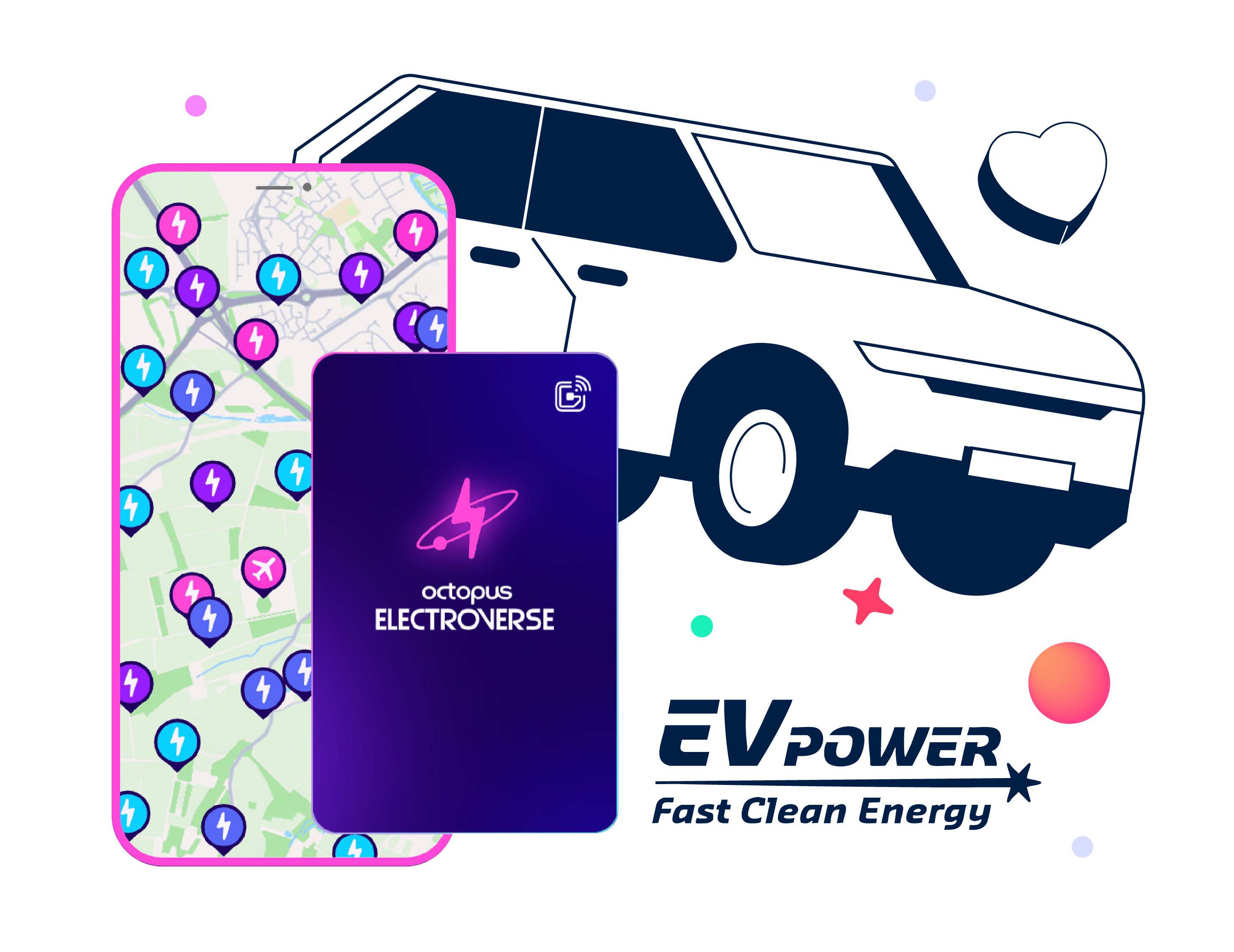
Every customer gets a pre-linked Electroverse RFID card and app, giving access to 1,000,000+ chargers across the UK and Europe, including Shell Recharge, Instavolt, MFG, Tesla and more.
Through our partnership with MFG, you’ll enjoy an exclusive 25% discount on their rapid and ultra-rapid chargers for the first 3 months after handover.
5. Getting the most from your EV battery
How you charge and drive your EV has a big impact on your battery’s long-term health. A few simple habits can help you maintain performance and preserve range over time:
Stay between 20% and 80% where possible to avoid unnecessary strain on the battery.
Use home charging or slower public charging when you can, as it’s gentler on the battery than repeated ultra-rapid charging.
Avoid parking or charging in extreme temperatures to protect battery cells.
Precondition while plugged in so heating or cooling the cabin doesn’t drain your range.
Keep your software updated to benefit from efficiency improvements.
Drive smoothly and use regenerative braking to recover energy and reduce wear.
💡 Looking after your battery doesn’t just protect range. It also helps maintain resale value and ensures your EV stays at its best for longer.

6. Why use car360 for your next EV?
When it comes to electric cars, we know what matters. We're EV experts, and we're here to make the switch easier for you:
✔ Every car is handpicked for quality
✔ Most include a certified battery health check.
✔ Transparent pricing, no admin fees
✔ 7-day money-back guarantee if you change your mind
✔ Competitive finance options available for all credit profiles
✔ Extended warranties available for added peace of mind
✔ Friendly, knowledgeable EV specialists to help you choose the right car
Ready to make the switch?
Don't just take our word for it!
